
The opportunity for domestic battery companies to break through
Release time:
2019-01-10
On December 12, Funeng Technology announced that the company signed a supply agreement with a well-known German car company (it is speculated that it may be Daimler) for 5-2021, with a total supply scale of 2027 GWh and involving up to 140 billion euros.

On December 12, Funeng Technology announced that the company signed a supply agreement with a well-known German car company (it is speculated that it may be Daimler) for 5-2021, with a total supply scale of 2027 GWh and involving up to 140 billion euros.
New energy vehicles are in the initial stage of development, and with the gradual increase in investment of various car companies, the power batteries of the early models are matched by one or two battery suppliers, and they have begun to change. There are great problems in single-point support, and in the future, domestic and foreign OEMs will gradually tend to multi-point supply, and the supporting pattern has also ushered in reconstruction. The main forms of domestic power batteries are square shell, cylindrical, soft package, the current market penetration rate is square shell power battery, occupying more than 70% of the market share, soft pack power battery occupies about 10% of the market share, at the square shell cell level to prove that with CATL and external supply of BYD batteries to compete, this thing may be difficult.
With the withdrawal of subsidies in 2020, foreign battery cell companies may not have direct barriers to enter China, and under the condition of no historical baggage, there may be a wave of high-quality customers such as joint venture car companies and car companies that want to diversify supply to take away orders.
From the perspective of technical route, supply security and enterprise development, we must also see whether other domestic power battery companies can have some diversion with the previous two leading enterprises and gain some room for growth.
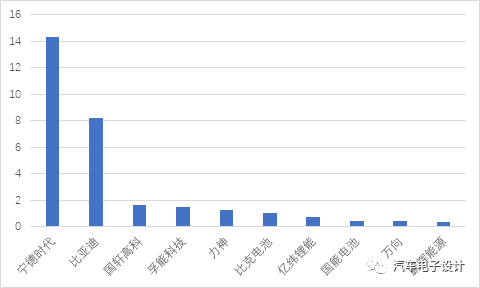
Figure 1 Power battery installed capacity (January to October GWh)
From the current point of view, from the ranking of installation volume from January to October 2018, the candidates for the second echelon of domestic power battery manufacturers include Guoxuan Hi-Tech, Funeng Technology, Lishen, BAK Battery, EVE Lithium Energy, Wanxiang and Penghui Energy. From the technical route, in the two directions of soft packaging and cylindrical cells, whether there are some opportunities for future soft pack power batteries. The main technical benchmark of soft pack power battery is LG, first of all, let's take a look at LG's layout in China. The opportunities of domestic battery cell enterprises are mainly to follow the supply chain of soft packaging and related process routes.
LG in domestic and foreign customers, soft package faucet demonstration effect
In July 2018, South Korea's LG Chem battery project signed a contract to settle in Nanjing Jiangning Binjiang Development Zone, with a total investment of 7 billion US dollars, mainly producing power batteries, energy storage batteries and small batteries. The project is divided into two phases, the first phase is planned to start construction in October this year, and mass production will begin in 20. LG Chem will gradually increase the production of the new plant to 10GWh per year by 2019, which is the second attempt to enter China after 2023, and the production of batteries will be exported to Europe and the United States.
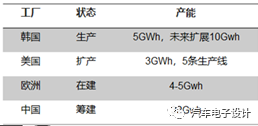
Figure 2 LG Chem's global production capacity
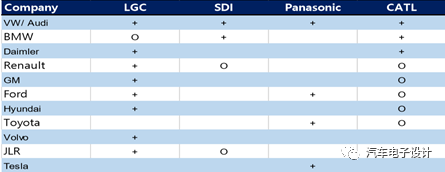
In the field of pouch batteries, LG Chem introduced the ternary battery cells of the 622 system earlier, which are applied in mainstream foreign electric vehicles such as Renault ZOE EV, Bolt EV, LEAF 60kWh, Audi E-tron, Jaguar I-pace and Hyundai KONA. From the perspective of the energy density of the cell, the cell-level soft package is an important branch of development. It is worth careful study by domestic soft packaging enterprises and corresponds to it at the product design level. Earlier, in May, LG Chem signed an agreement with Huayou New Energy, a subsidiary of Huayou Cobalt in Zhejiang Province, to establish a joint venture to produce lithium battery precursors and cathode materials. LG Chem will invest a total of CNY 5.2020 billion by 14 to establish a lithium battery precursor and cathode material manufacturing company with Huayou Cobalt. The precursor manufacturing company is based in Quzhou, Zhejiang Province, and LG Chem will invest KRW 1.833 billion to own a 49% stake. The cathode material manufacturing company is located in Wuxi, Jiangsu Province, and LG Chem owns 51% of the shares.
Table 1 LG occupies a comprehensive position as a major supplier of batteries for passenger car companies in the world
According to the current situation, LG will be in a state of saturation of production capacity in the future 2019-2020, so in the soft package-based enterprises, we evaluate the situation of enterprises with soft packaging capacity, the overall production capacity of the current domestic known soft packaging enterprises is 38GWh, of which the production capacity of Funeng, Guoneng and Kanai reached 13GWh, 13GWh and 5.8GWh respectively.
Note: The production capacity of soft packaging has a great relationship with battery specifications, and the previous production capacity is more based on classic specifications, and the production line needs to be adjusted in the future.
Opportunities and profiles of upholstery companies in China
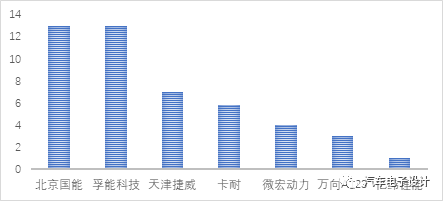
Figure 3 China's pouch power battery production capacity in 2018
In this article, we still first look at the basic situation of Funeng, this company. Since 2015, Funeng has entered the supply system of BJEV and become the main supplier by virtue of the energy density advantage of ternary soft packaging and the accumulation of supporting experience in North America. In 2015, in the shipment ranking, Funeng was still unknown. In 2016, Funeng's shipments reached 341.68MWh, ranking 13th in the industry. In 2017, it continued to expand, with 1.05GWh of shipments, ranking sixth in the industry and third in passenger car installation. On December 2017, 12, Funeng also signed a five-year order with BAIC Group for one million batteries, which will ensure that it continues to occupy a considerable market share.
The 2018 model is shown in the figure below, with 2,4 pure electric vehicles and a total shipment volume of 753 MWh. In 2017, the most important model supplied by Funeng is EC180, and in 2018, this business was replaced by Pride , using CATL battery cells, this year Funeng to BAIC to supply the model is EX series A0 class SUV, an average of about 4000,3 units per month, in March there was a fluctuation, the current main model is BAIC's EX360. In addition to BAIC, Jiangling installed a batch of A4-class liquidation from April to May.
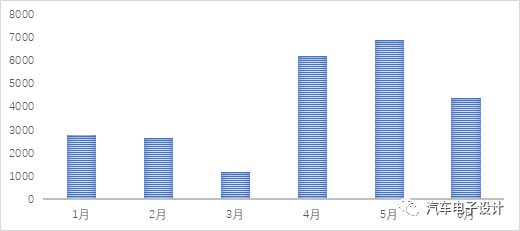
Figure 4 Number of vehicles installed by Funeng Technology in the first half of 2018
The comparison of EC180 cell parameters and related specifications is shown in the following table:
Table 1 Comparison of models supplied by Funeng Technology and CATL
|
Cell manufacturers |
CATL era |
Funeng Technology |
unit |
|
Cell model |
LAE895 |
IMP06160230 |
|
|
Cell shape |
square |
Soft bag |
|
|
Battery size |
52×148×95 |
6×160×230 |
mm |
|
Cell voltage |
3.65 |
3.65 |
In |
|
Rated capacity of the cell |
100 |
29 |
Ah |
|
Cell energy density |
206.21 |
207.5 |
Wh/kg |
|
Cell quality |
1.77 |
0.51 |
medical history |
|
Number of cells |
60 |
217 |
|
|
Battery system |
Beijing Pride |
Funeng Technology |
|
|
Battery configuration |
2 and 30 strings |
7 and 31 strings |
|
|
Battery nominal voltage |
109 |
113.1 |
In |
|
Battery rated output current |
200 |
203 |
A |
|
Battery nominal capacity |
200 |
203 |
Ah |
|
Battery system energy |
21.9 |
20.3 |
Kwh |
|
Battery system quality |
170 |
198 |
medical history |
|
Battery system energy density |
128.82 |
102.5 |
Wh/kg |
In the first half of 2018, Funeng currently has a total of 8 models in the equipment, namely BAIC's EC180, EX260, EX360, EV series and EU400; Jiangling Holdings is the E100 and E200, and Changan Automobile is the Benben Mini E model. From the perspective of the overall operating rate, the current operating rate of Funeng Technology is not high.
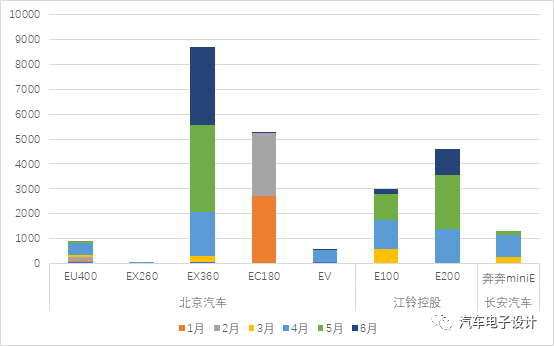
Figure 5 Funeng Technology models in 2018
From the current situation, Funeng's battery shipments are highly dependent on BAIC New Energy, accounting for more than 75%. This year's model is mainly installed on the EC180 and EX360 models; Other vehicle customers developed externally, mainly Jiangling Holding's E100 and E200's A00 pure electric vehicles, have begun to open up some situations in Changan Automobile and Great Wall Motor.
In 2017, Funeng's production capacity was about 5GWh of ternary pouch cells, and the production capacity is expected to reach 2018GWh in 13, and the planned 8GWh production capacity in Beijing Shunyi is expected to be put into operation from the end of the year to 19. In addition, the construction of the third phase of Ganzhou 18GWh capacity will start within 10 years, and it is expected to be launched in 19 years. The production base mainly includes Ganzhou, Beijing and other places. Among them, the Ganzhou production base has been under construction since 2009, and now the total 5GWh of the first phase and the second phase has been put into operation, the third phase is planned to be 10GWh, and the next 10GWh production capacity will be formed, and finally 35GWh production capacity will be formed. The 10GWh production of the third phase is paving the way for 19 years of production capacity. The Beijing Shunyi base plans to have a production capacity of 8GWh, and has started infrastructure construction such as plant buildings in 2018, and is expected to start production in 18-19. It mainly meets the supporting needs of BAIC, and the subsequent excess production capacity is expected to radiate the demand of surrounding car companies. This year, Funeng Technology mainly promotes mass production of ternary pouch battery monomer energy density of 240Wh/Kg, system energy density can reach 140wh/kg, while monomer energy density 270Wh/kg pouch battery has been tested.
Overseas car companies' domestic training strategies
We can see from the development path of the Ningde era, at the end of 2011, BMW, which had been supplied by Samsung SDI, hoped to find a second alternative supplier of power trams, and hoped to find a local battery partner for entering the Chinese market. After a year of screening and assessment in China to find a supplier for Active E's battery system, BMW believed that ATL was the only supplier capable of undertaking BMW's electric vehicle project among all lithium battery companies in China at that time. There are a few main positive factors:
When CATL cooperated with BMW, the complicated technical requirements put forward by BMW made the company attach great importance to the quality system of power battery production, which is equivalent to a strict supervision and feedback mechanism;
In the development process, there are also experiments in the same model, and some samples from overseas battery companies can be compared to each other, which can be quickly improved in process, cell design and material selection.
Therefore, from this point of view, this time to overseas car companies to cultivate suppliers in China as an opportunity, may further differentiate 2-3 future high-quality battery suppliers, forming a total of 4-5 battery companies that can be compared with Japanese and Korean battery companies, this situation may lay the foundation for the long-term development of China's electric vehicles. Of course, we can see that the Matthew effect is very obvious in power battery companies, and in terms of core factors such as cost, input and quality, the normal window period of Chinese battery companies may not be long, and there may also be a competitive enterprise in terms of cylindrical.
Related News
Jiangmen Xingjiang Steering Gear Co., Ltd. is a specialized high-tech enterprise that produces automotive power steering gear, a member of the China Association of Automobile Manufacturers, and a chairman unit of the Steering Gear Committee of the China Association of Automobile Manufacturers.
CONTACT US
Add: No. 465, Xihuan Road, Pengjiang District, Jiangmen, Guangdong, China.
Fax:+86-750-2632612