
Wang Binggang: In the next ten ye
Release time:
2018-10-29
It is expected that in the next decade or more, electric vehicles will only be suitable for urban transportation, while gasoline vehicles will still play an important role in transportation. At the "Automotive Think Tank Establishment Conference and 2018 Smart China Automotive Development Seminar" jointly organized by the Hunan Provincial Department of Industry and Information Technology, China Automotive News, and Xiangtan City People's Government on October 25th, Wang Binggang, the expert group leader of the National Clean Automobile Action Coordination Leading Group, said this.

"It is expected that in the next decade or more, electric vehicles will only be suitable for intra-city transportation, while fuel vehicles will continue to play an important role in transportation." Wang Binggang, leader of the expert group of the National Clean Vehicle Action Coordination Leading Group, said at the "Automotive Think Tank Inaugural Conference and 10 Chi Heng China Automobile Development Seminar" co-hosted by the Hunan Provincial Department of Industry and Information Technology, China Automotive News and Xiangtan Municipal People's Government on October 25.
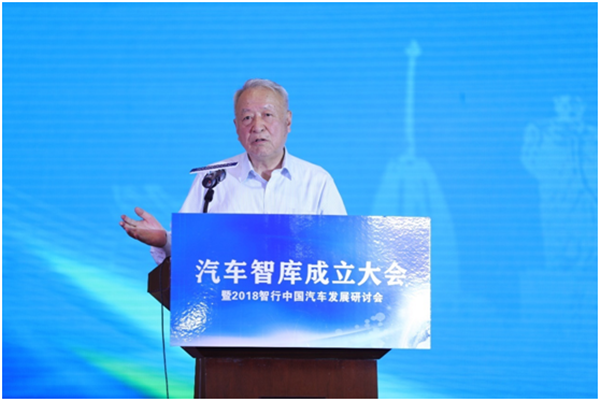
Wang Binggang
►The energy density of the monomer is expected to be 300Wh/kg
The development of electric vehicles is closely related to power batteries, and the development of electric vehicles in the world has gone up and down several times, and the emergence of lithium batteries has made electric vehicles successfully enter the market.
Battery technology is constantly advancing. Wang Binggang pointed out that in the short term, by 2020, the energy density of battery cells is expected to exceed 300Wh/kg; In the medium term, in 2025~2030, the energy density may exceed 400Wh/kg, but this value is still in the laboratory stage, and industrialization is hopeless in 2025; In the long run, that is, after 2030, the development of new technologies such as lithium-sulfur batteries and lithium-air batteries is expected to push the energy density to more than 500Wh/kg, but there are too many unknown factors and the prospects for industrialization are slim.
"In the next 10 years or even longer, we must base on batteries with an energy density of about 300Wh/kg, and the industrialization prospects of new power battery technology with higher energy density are unknown." Wang Binggang said.
►Electric vehicles are temporarily not suitable for inter-city transportation
Wang Binggang said that batteries equipped with A-class and below passenger cars with a single energy density of 300Wh/kg and a system cost of 1 yuan/Wh can meet the needs of intra-city travel, and from the perspective of comprehensive economy, they can compete with fuel vehicles. However, the driving range of electric vehicles will be significantly reduced under high-speed driving conditions, and it is difficult to meet the traffic needs between cities with the current level of electric vehicle technology.
As for fast charging, Wang Binggang pointed out that the current high specific energy battery is not suitable for fast charging. First of all, the battery cycle life is obviously related to the charging rate, and fast charging will lead to high specific energy battery life; Secondly, the battery temperature rises rapidly during the fast charging process, which brings potential safety hazards. Therefore, Wang Binggang believes that in the next decade, electric vehicles will be suitable for intra-city transportation and can replace some of the functions of fuel vehicles, while they will be somewhat reluctant to be used for inter-city transportation. Regarding the previously rumored ban on the sale of fuel vehicles, Wang Binggang did not agree, believing that China did not need to do so.

► Formulate non-subsidized policies
In September this year, the Society of Automotive Engineers of China completed the world's first group standard for "Life Cycle Greenhouse Gas and Air Pollutant Emission Evaluation Method" and the 9 evaluation report for automobiles. According to the report, in 2018, the average fuel consumption of gasoline passenger cars in China was 2017.6 L/7km, the average electricity consumption of pure electric passenger cars was 100.16 kWh/2km, and the average greenhouse gas emissions of pure electric passenger vehicles during the fuel cycle were 100% lower than that of gasoline passenger cars, which has a significant effect on reducing carbon emissions. With the ultra-low emission transformation of coal-fired power plants and the increase in the proportion of renewable energy generation, the role of electric vehicles in air governance will become more and more apparent.
After the subsidy declines, how can new energy vehicles develop healthily? In this regard, Wang Binggang put forward a series of suggestions, such as scientific and technological innovation project support; Formulation of new investment management measures for the automotive industry; Closely link the promotion of new energy vehicles with the task of defending the blue sky; Cities have formulated timetables for the electrification of vehicles in the public sector, and expanded the implementation of the policy of no restrictions on driving and purchase of new energy vehicles; Appropriate subsidies will be given for infrastructure construction, and zero-emission demonstration zones will be built. "There is a general trend towards the electrification of vehicles in the public sector, including buses, taxis, logistics vehicles, shared rental cars, sanitation vehicles, etc. To control the atmospheric environment, public domain vehicles are indispensable. Wang Binggang said.
Related News
Jiangmen Xingjiang Steering Gear Co., Ltd. is a specialized high-tech enterprise that produces automotive power steering gear, a member of the China Association of Automobile Manufacturers, and a chairman unit of the Steering Gear Committee of the China Association of Automobile Manufacturers.
CONTACT US
Add: No. 465, Xihuan Road, Pengjiang District, Jiangmen, Guangdong, China.
Fax:+86-750-2632612