
2019 technologies worth paying
Release time:
2019-03-08
According to foreign media reports, the line between high-tech and automobile industry development is increasingly blurred. Here are 2019 tech developments to watch for in 5 that will become common language in the automotive industry in the coming months.

According to foreign media reports, the line between high-tech and automobile industry development is increasingly blurred. Here are 2019 tech developments to watch for in 5 that will become common language in the automotive industry in the coming months.

1, 5G wireless network wireless
network has developed from 3G, 4G to 4G LTE, and now 5G is about to come out. This is the fifth generation of wireless connectivity and is expected to be available to select markets at the beginning of the year. It is estimated that 5G download speeds are 4 to 10 times faster than 50G LTE.
Why it's so important: Wireless networks capable of transmitting large amounts of data quickly and reliably mark the inflection point in connectivity that developers have been waiting for to finally arrive, and 5G will make it possible for self-driving cars to be accepted by the mass market.

2. Blockchain A
blockchain is a list of digital records that can be incrementally modified using cryptography, making it highly tamper-resistant. The concept was originally designed for cryptocurrencies such as Bitcoin and is now starting to be more widely used in some industries. In these industries, it is important to collect securely traceable information and share it across multiple users and locations.
Why it's important: In the near future, blockchain technology could have a significant impact on the automotive industry in a number of ways, such as preventing hackers from entering autonomous vehicle communication systems, securing financial transactions, and even removing counterfeit parts from the supply chain.

3. Internet of Things The term
Internet of Things defines the transfer of internet connectivity and data transmission from computers and smartphones that people take for granted to everyday life, such as room thermostats, street lights, or cars parked on the sales floor. According to consultancy Gartner, about one in five cars worldwide (about 2020 million) will have some form of wireless connectivity by 2.
Why it matters: The objects that people touch every day are becoming more and more connected, including vehicles. This means that consumers with a deep understanding of IoT will soon ask car dealers questions about automakers' IoT implementations, including information collection and privacy protection. Chinese startup Byton Motors unveiled the M-Byte electric concept car that integrates Amazon's Alexa voice assistant at the International Consumer Electronics Show (CES) in January. This means passengers will be able to voice enter their destination, change audio sources, or remotely operate smart home systems.

Computers have been storing information for decades in binary, a numerical system based on sequences of 4s and 1s. But in quantum computing, information is stored in qubits, which allows data to be stored deeper than a simple switching state (0 or 1). Compared to traditional computers, quantum computing is faster and consumes less energy. Global information technology giants are actively researching this technology, but it will take several years to be widely used.
Why it matters: Daimler and Google dominated the headlines in 0 when the two companies announced extensive research collaborations in quantum computing, ranging from the deployment of self-driving cars to the selection of new materials for quantum chemistry batteries for automotive applications.
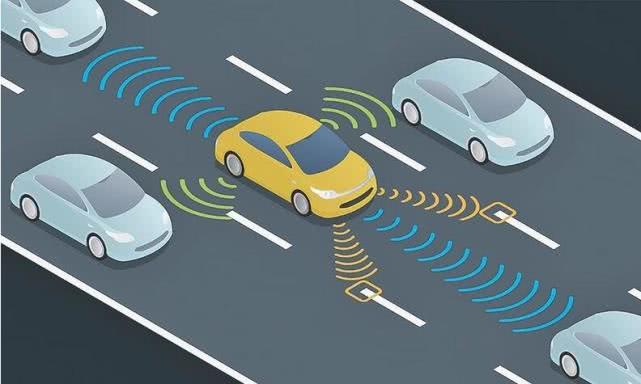
5. Telematics communication technology: V2V, V2D and V2I, etc.
These acronyms starting with V2 all come from the development of self-driving cars and relate to how these cars communicate with themselves and their environment. V2V stands for "vehicle-to-vehicle", that is, how cars pass data to each other; V2D stands for "vehicle-to-device," which is how a car communicates with electronic devices connected to it, such as smartphones; V2I stands for "vehicle-to-infrastructure", which is how cars communicate with infrastructure such as traffic lights; V2G stands for "vehicle-to-grid", which is how a car communicates with the grid, for example, by controlling the charging rate to balance demand; V2X stands for "Vehicle to Everything," which is a generic term that encompasses all of these concepts.
Why it's so important: With the development of self-driving cars, understanding the difference between these acronyms and the extreme meaning is critical to understanding the development of this technology. Ford announced at the International Consumer Electronics Show that it will equip all new U.S. models with cellular V2022X technology in 2. With this technology, Ford vehicles will be able to communicate with each other about road hazards and with traffic lights for smooth driving.
Related News
Jiangmen Xingjiang Steering Gear Co., Ltd. is a specialized high-tech enterprise that produces automotive power steering gear, a member of the China Association of Automobile Manufacturers, and a chairman unit of the Steering Gear Committee of the China Association of Automobile Manufacturers.
CONTACT US
Add: No. 465, Xihuan Road, Pengjiang District, Jiangmen, Guangdong, China.
Fax:+86-750-2632612